Looking for inspiration?
We’re intentionally soliciting talks at all levels: introductory, general interest, advanced. The ideal presentation is preferably about 45 minutes in length and absolutely no longer than 50 minutes. This will allow time for subsequent speakers to set up. Here are just a few ideas to spark your imagination as you prepare a talk about The Excitement of Amateur Radio. (Don’t worry. You may see an inspiration in one subject group and apply it to another.)
Antennas and Propagation Subjects. Simple antennas for the newcomer. Making antennas out of aluminum, or wire. Antenna projects as club activities. All about transmission lines and connectors. Knowledgeable purchasing. Rotators. Tower safety. When should I get on the air, and on which band? Propagation basics. Beacons. Propagation modeling. Propagation reporting. What are all these sunspot numbers, A, and K factors, anyway? The decibel. What’s next in the solar cycle. Results of your own propagation studies. HamSCI activities.
Operating Activities Subjects.
On The Air. Introduction to fox hunting, to ARDF, to OTAs (Summits, Parks, Lighthouses, Boy Scout Jamborees, Girl Scout Thinking days, etc.). International cooperative efforts. Operating practice and/or ethics. Operating awards. Geography and topography. VHF+ hilltopping and roving. Tips and techniques for your successful activity. Activity travelogues. QSLing. Occupying underutilized bands or modes.
Contesting. Introduction to contesting. Configuring your station. Maximizing your score. Breaking through pile-ups. Tips for the “little pistol” competitors. Logging programs and techniques. Submitting logs. Field day war stories.
DXing. Introduction to DXing. Wallpaper opportunities. Organizing and managing a DXpedition. Amateur Radio demographics around the world. Tips for the “little pistol” DX chasers. Getting started with Logbook of the World. Travelogues.
EMCOM, Public Service, and Traffic Subjects. What happens to “When all else fails” when the Internet fails. EMCOM/PS preparation and training. The Incident Commander concept. Initiating and managing local EMCOM relationships. Case studies of or reports on emergency communications.
Introduction to public service. Public service experiences. Case studies of or reports on public service events. Go-kits/portable/packable/mobile equipment. Portable power. Introduction to traffic handling.
Restructuring of the NTS. Analog and digital repeater systems and networks. Analysis of command, control, and communications during Paul Rever’s 1775 ride.
History, Invention, and Reinvention Subjects. Where did we come from. Historical artifacts. Amateur Radio’s contributions to the art and technology of radio. Amateur Radio demographics. A tank away: radio-related tourist venues. How can Amateur Radio thrive: where are we going, how do we get there. Rejuvenating clubs and club meetings.
League, Division, and Section Activities and News. What’s next, what’s big in Amateur Radio. Rules and regulations. Major operating activities. Supporting scouting activities and college clubs.
Technical Subjects. New signal sources, modes, or modulation schemes. Introduction to the digital modes. Introduction to repeaters, DSTAR, DMR, etc. The analog modes aren’t dead. Unusual modes (video, telemetry, remote control, etc.) Equipment construction techniques. Physical circuits versus programming. The basics of software defined radios. SMD soldering. Parts and programs resources. Hints and Kinks. RFI chasing and fixing. Using clusters, spotters, and reporters. How to remotely control your station. Frontiers in the hobby. The Clean Signal Initiative. Exploring Lightwave communications. Experiences at HF and below, VHF and above. Shack networking and interfacing. Remote operation. Reports of experiments, studies, or significant achievements.
Training and Education Subjects. T&E planning for your club. T&E success (or failure) stories. Demonstrations, and how to present them. Long format versus short format license preparation. Tech Nights. Post-exam, continuing, and remedial training. Finding candidate trainees. Bringing the next
generation on board. Elmering.
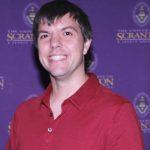 We are proud to feature special guest speaker Dr. Nathaniel A. Frissell, W2NAF, from the Ham Radio Science Citizen Investigation (HamSCI) program who will present “HamSCI: Space Weather We Can Do Together!” at the 2025 HamXposition Grand Banquet. Dr. Frissell will discuss results from a number of recent HamSCI experiments, what’s next for HamSCI in the future, and how you can participate in these exciting projects.
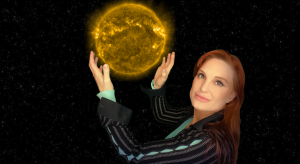 Woodland Hills resident Dr. Tamitha Skov, WX6SWW, reports that she is safe following the devastating wild fires in the Los Angeles area. Skov was the 2024 Northeast HamXposition Grand Banquet speaker.